Legality
 Available in US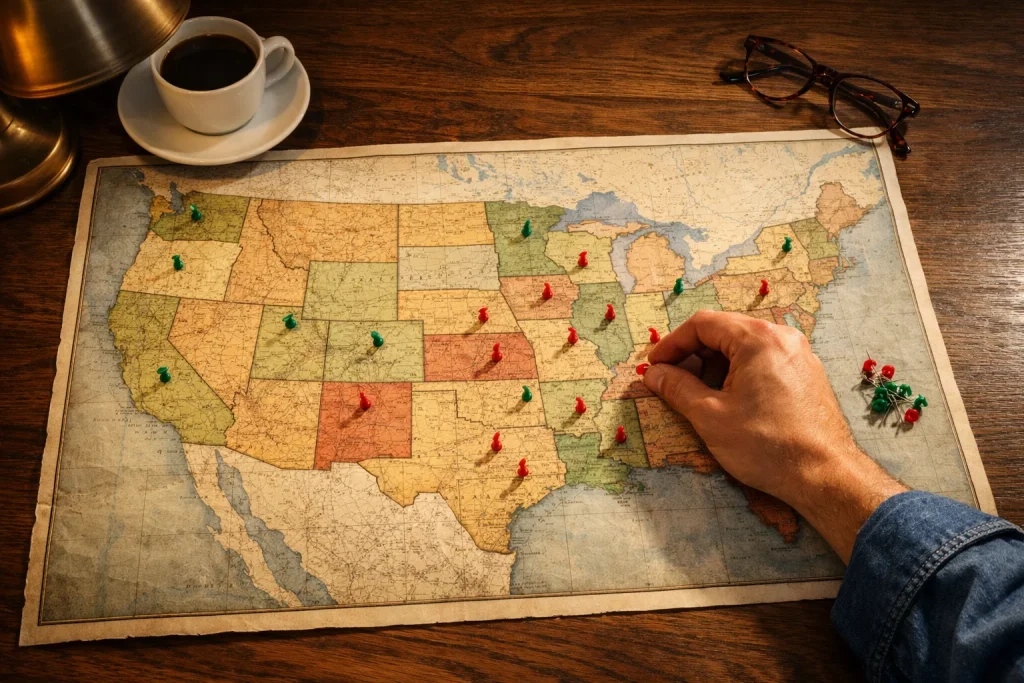
The legal status of sweepstakes casinos across US states is more complicated than a simple yes-or-no map would suggest. Legal in thirty-five or more states, but the map is changing. What was accessible last year might be prohibited today, and platforms that currently operate freely could face restrictions within months.
According to KPMG’s analysis of the emerging sweepstakes gaming industry, these platforms are legally available in over thirty-five states compared to just seven states with legalized iGaming. That disparity explains much of the category’s rapid growth—sweepstakes casinos fill a demand that regulated online gambling doesn’t reach. But the wide availability comes with significant asterisks.
State responses to sweepstakes gaming range from implicit acceptance to aggressive enforcement. Some states have taken no position, allowing platforms to operate without explicit authorization but also without prohibition. Others have moved decisively to shut down access, issuing cease-and-desist orders, passing new legislation, or pursuing operators in court. The patchwork nature of American gambling regulation means players need state-specific information, not general assurances.
This guide examines the federal framework that allows sweepstakes casinos to exist, identifies which states permit unrestricted access, details the restrictions in effect across prohibited jurisdictions, and tracks the regulatory actions that continue to reshape the landscape. Whether you’re checking if you can play from your current location or trying to understand why access disappeared, the information here reflects the situation as of early 2026.
The stakes for getting this wrong aren’t trivial. Playing from a prohibited state can result in account closure, forfeiture of balances, and potential legal exposure depending on jurisdiction. Understanding where sweepstakes casinos legally operate—and where they don’t—protects your ability to participate safely where permitted and helps you avoid complications where access isn’t currently available.
The Federal Legal Framework
Federal law doesn’t specifically address sweepstakes casinos, and that gap is central to why they exist. The Unlawful Internet Gambling Enforcement Act of 2006 prohibits financial institutions from processing transactions related to unlawful internet gambling, but it doesn’t define what gambling is—that determination falls to state law. Sweepstakes casinos operate on the premise that they don’t constitute gambling under most state definitions because no purchase is necessary to participate.
The Wire Act of 1961 restricts certain types of interstate wagering, but its application has been narrowed through court interpretation and Department of Justice guidance to focus primarily on sports betting. Casino-style games haven’t been the target of Wire Act enforcement, leaving sweepstakes platforms outside its practical reach. This doesn’t mean federal law approves sweepstakes casinos—it means federal law largely doesn’t address them directly.
Federal Trade Commission regulations govern promotional sweepstakes generally, establishing requirements around free entry methods, odds disclosure, and fair administration. These regulations apply to sweepstakes casinos alongside traditional promotional contests. Compliance with FTC standards is part of what allows operators to claim legitimate sweepstakes status rather than gambling classification.
The Professional and Amateur Sports Protection Act was struck down by the Supreme Court in 2018, but that case specifically concerned sports betting rather than casino gaming. Its legacy reinforced that gambling regulation is primarily a state matter, with federal involvement limited to specific prohibitions rather than comprehensive oversight. Sweepstakes casinos benefit from this decentralized structure by finding acceptance in states that haven’t moved to restrict them.
No federal agency licenses or regulates sweepstakes casinos as a category. Unlike traditional casinos, which operate under state gaming commission oversight, or legal online gambling sites, which require state licensure, sweepstakes platforms function without dedicated regulatory supervision in most jurisdictions. They’re subject to general consumer protection laws and FTC guidance, but not to gambling-specific federal requirements.
This absence of federal prohibition creates space for operation, but it also creates uncertainty. Without clear federal guidance, each state makes its own determination about whether sweepstakes casinos constitute illegal gambling under state law. Those determinations vary dramatically, from implicit tolerance to explicit prohibition. The federal framework provides a foundation for sweepstakes legitimacy while leaving the ultimate questions to fifty different state authorities.
Operators typically position themselves as technology companies running promotional sweepstakes rather than gambling businesses. This characterization affects how they’re treated for tax purposes, licensing requirements, and regulatory oversight. Whether regulators accept that characterization depends on the specific state and its approach to gambling enforcement.
States Where Sweepstakes Casinos Operate Freely
The majority of US states permit sweepstakes casino access without explicit restrictions. This includes states across every region—Northeast, Southeast, Midwest, Southwest, and parts of the West Coast. The platforms operate not because states have specifically legalized them, but because state gambling definitions and enforcement priorities don’t target promotional sweepstakes with free entry options.
Texas represents one of the largest markets for sweepstakes casinos precisely because it lacks legal online gambling alternatives. The state prohibits most forms of gambling but hasn’t moved against sweepstakes platforms that structure themselves as promotional contests. Florida follows a similar pattern, with large player populations accessing sweepstakes casinos despite the state’s complex gambling landscape and tribal gaming agreements.
Midwestern states including Ohio, Illinois, and Indiana permit sweepstakes casino access. Some of these states have regulated sports betting or even iGaming, creating situations where players can access both sweepstakes platforms and licensed gambling sites. The coexistence suggests that regulators view the categories differently, at least for now.
Southeastern states like Georgia, Tennessee, and the Carolinas have established sweepstakes casino player bases. These states generally restrict gambling but haven’t classified promotional sweepstakes with free entry as falling within those restrictions. Local enforcement priorities and attorney general interpretations shape the practical reality more than statute language alone.
Mountain West states including Colorado, Arizona, and New Mexico permit access in most cases. Colorado’s regulated sports betting and casino markets exist alongside sweepstakes platforms, with no apparent conflict in enforcement priorities. Arizona’s tribal gaming compacts haven’t extended to restrict sweepstakes operations.
It’s worth emphasizing that “permitted” often means “not prohibited” rather than “officially sanctioned.” Most states haven’t passed laws specifically authorizing sweepstakes casinos. They’ve simply not taken action to stop them. This passive acceptance could change if legislative or regulatory attention shifts, which is why monitoring developments in your state remains important even if access currently exists.
Platform availability varies even within permissive states. Individual operators make their own decisions about where to accept players based on their legal assessments and risk tolerance. A state that one platform treats as fully accessible might be restricted by another operator making more conservative compliance choices. Checking specific platform terms for your state provides more reliable guidance than general market descriptions.
The common thread across accessible states is the absence of specific action targeting sweepstakes casinos. States that permit access haven’t necessarily examined the model and approved it—they’ve simply not moved to restrict it. That distinction matters for understanding the fragility of current access and the potential for future changes.
States with Restrictions or Prohibitions
A handful of states have taken explicit action against sweepstakes casinos, ranging from complete prohibition to targeted enforcement against specific operators. These restrictions reflect different legal theories about why sweepstakes casinos should be treated as gambling, different political pressures from competing gaming interests, and different enforcement priorities among state officials.
Washington State maintains the strictest and longest-standing prohibition. State law classifies online gambling broadly, and regulators have consistently treated sweepstakes casinos as falling within that prohibition. Court cases have validated this interpretation, resulting in significant financial penalties for operators who accepted Washington players.
Idaho prohibits most forms of gambling and extends that prohibition to sweepstakes casinos. The state’s restrictive gambling framework leaves little room for the promotional sweepstakes defense that works elsewhere. Operators generally exclude Idaho from their accessible markets to avoid enforcement risk.
New York has moved from a gray area to explicit restriction. Legislative action and attorney general enforcement have combined to effectively shut down sweepstakes casino operations in the state. The penalties established under New York law create substantial deterrent: violations can result in fines from $10,000 to $100,000 per offense according to Senate Bill S.5935A.
Nevada’s situation involves competition rather than moral opposition. As the nation’s gambling capital, Nevada protects its licensed casino industry through restrictions on unlicensed gaming alternatives. Sweepstakes casinos that don’t hold Nevada gaming licenses typically don’t accept Nevada players, avoiding conflict with the state’s powerful gaming establishment.
Michigan’s gaming commission has signaled concern about sweepstakes casinos operating without state oversight. The state has regulated iGaming, creating a licensed market that sweepstakes platforms compete against without equivalent regulatory burden. Enforcement actions and public statements from gaming officials indicate ongoing scrutiny.
Montana and certain other states impose restrictions through specific statutory provisions that sweep more broadly than typical gambling laws. These may target “electronic gambling devices” or similar categories that regulators interpret to include sweepstakes casino software. The legal theories vary, but the practical result is reduced or eliminated access.
The American Gaming Association reports that eight states currently regulate iGaming: Connecticut, Delaware, Michigan, New Jersey, Pennsylvania, Rhode Island, West Virginia, and Nevada for poker only. These states have established frameworks for legal online gambling that may create pressure to bring sweepstakes casinos under similar oversight—or to prohibit them as unlicensed competition.
Washington State: The Strictest Prohibition
Washington State has treated sweepstakes casinos as illegal gambling for years, and court decisions have reinforced that position with expensive consequences for operators. The state’s gambling laws define prohibited activity broadly, and regulators have consistently rejected arguments that promotional sweepstakes structures exempt online casino-style platforms from those definitions.
The legal theory in Washington focuses on whether the platforms constitute “gambling” regardless of the sweepstakes framing. State law defines gambling based on the presence of consideration, chance, and prize. Prosecutors and plaintiffs have argued that even with free entry options, the practical reality of sweepstakes casinos involves consideration—players purchase Gold Coins specifically to receive Sweep Coins, making the free alternatives nominal rather than genuine.
Class action litigation against social casino and sweepstakes operators has found fertile ground in Washington courts. The most significant verdict came in February 2025, when a jury ordered High 5 Games to pay $24.9 million in damages—the first class action verdict against a social casino operator to go to trial rather than settling. According to court records reported by the plaintiff’s counsel, Washington players lost nearly $18 million to the platform, with the jury adding additional damages for the violation.
Prior settlements established the financial risk for operators. DoubleDown Interactive paid $415 million to resolve Washington claims in 2023. Other operators have settled for smaller but still substantial amounts. The cumulative effect has been to create an environment where operators face severe financial exposure for accepting Washington players.
Washington’s gambling commission maintains explicit guidance that social casino games with real-money redemption features are illegal in the state. This guidance applies regardless of how operators structure their terms of service or whether they call their platforms sweepstakes, social casinos, or promotional gaming sites. The substance matters more than the label.
Players attempting to access sweepstakes casinos from Washington face account restrictions at compliant platforms. Geolocation technology identifies Washington connections and blocks access or account creation. Platforms that don’t implement these restrictions expose themselves to the enforcement and litigation that has proven so costly.
The Washington precedent influences how operators approach compliance nationally. The financial consequences of non-compliance in Washington—settlements totaling hundreds of millions of dollars plus the High 5 verdict—create powerful incentive to take state restrictions seriously everywhere. Washington’s enforcement environment shaped industry practices that now extend to other restricted states.
New York: From Gray Area to Explicit Ban
New York’s treatment of sweepstakes casinos shifted dramatically in 2025, moving from uncertain status to outright prohibition through both legislative action and aggressive enforcement. The state now represents one of the most hostile environments for sweepstakes gaming, with explicit laws, substantial penalties, and active enforcement that has driven operators out of the market.
Senate Bill S.5935A established the legal framework for prohibition. The legislation specifically targets platforms operating with dual-currency models—exactly the structure that defines sweepstakes casinos. By identifying and prohibiting the specific mechanics these platforms use, the law closed potential loopholes that might have allowed continued operation under alternative structures.
Senator Joseph P. Addabbo Jr., Chair of the Racing, Gaming and Wagering Committee, explained the legislative rationale clearly: “If a game on your phone or computer looks like a casino game, acts like a casino game, and pays out real money winnings like a casino game, then it is a casino gambling game, thus currently illegal and should not operate in New York without proper regulation, safeguards, and accountability.”
Attorney General enforcement complemented the legislative prohibition. According to the New York Attorney General’s office, cease-and-desist notices were sent to twenty-six sweepstakes platforms, and all of them stopped selling sweepstakes coins to New York residents in response. This coordinated enforcement action effectively shut down the market without requiring lengthy litigation.
The penalties established under New York law create significant deterrent. Violations can result in civil penalties ranging from $10,000 to $100,000 per violation. The per-violation structure means operators who continue accepting New York players face potentially massive cumulative exposure depending on how violations are counted.
New York’s regulated gambling market provides context for the crackdown. The state has mobile sports betting and is developing its approach to online casino gaming. Sweepstakes casinos represented competition that operated outside state oversight, captured revenue without paying state taxes, and didn’t contribute to the responsible gambling frameworks that licensed operators must support.
Players in New York who previously accessed sweepstakes casinos have found their accounts restricted or closed. Attempting to circumvent geographic restrictions through VPNs or other means violates platform terms of service and potentially state law. The practical reality is that sweepstakes casino access from New York has effectively ended for the foreseeable future.
The New York approach may influence other states considering how to address sweepstakes casinos. The combination of clear legislation, coordinated enforcement, and industry compliance demonstrated that determined state action can shut down market access quickly and effectively.
California: The 2026 Cutoff
California’s approach to sweepstakes casinos culminated in Assembly Bill 831, which prohibits these platforms from operating in the state effective January 1, 2026. The legislation passed after years of debate, lobbying from competing interests, and several failed attempts at broader gambling reform. For sweepstakes casino players in California, the countdown has arrived.
The legislative analysis supporting AB 831 characterized sweepstakes casinos as operating in a legal gray area that allowed them to offer casino-style gambling without the consumer protections, responsible gambling requirements, and tax contributions that licensed gambling operators provide. According to the Senate committee analysis, the bill addresses platforms that “blur the line between legal promotional sweepstakes and illegal gambling.”
Tribal gaming interests played a significant role in pushing for restriction. California tribes operate substantial casino businesses under compacts that grant them exclusivity over certain types of gaming. Sweepstakes casinos competing for the same players without paying compact fees or meeting tribal regulatory standards created economic and political pressure for prohibition.
Card rooms—the licensed poker establishments that operate throughout California—also opposed sweepstakes casino competition. These businesses face regulatory requirements and tax obligations that sweepstakes platforms avoided. The coalition supporting AB 831 included both tribal and card room interests alongside consumer protection advocates.
The effective date gives operators and players advance notice, but the transition will still disrupt existing player relationships. California’s population makes it one of the largest potential markets for any gaming platform. Losing access to California residents represents a significant revenue impact for operators who had been serving the state.
Players with existing accounts and balances face deadline pressure. Platforms operating in California need to wind down activities before January 2026, which means redemption opportunities and continued play will end. Players should monitor communications from platforms they use for specific guidance on California account closures.
Whether California’s prohibition influences other large states remains to be seen. The combination of tribal gaming power and card room lobbying that drove AB 831 doesn’t exist everywhere. But the model of targeting sweepstakes casinos specifically rather than relying on general gambling enforcement could spread to states considering similar action.
Regulatory Actions in 2025 and 2026
The regulatory environment for sweepstakes casinos has grown more challenging as state attention increases. The period from 2025 into early 2026 has seen coordinated enforcement, new legislation, and public statements from regulators that signal ongoing scrutiny. Understanding recent actions helps contextualize current restrictions and anticipate future developments.
New York’s twenty-six cease-and-desist notices represented the largest coordinated enforcement action against the industry. The attorney general’s office moved quickly and effectively, achieving market exit without requiring court proceedings or extended legal battles. The success of this approach may encourage other state attorneys general to pursue similar strategies.
Industry analysts have noted the regulatory pressure in their market projections. Eilers & Krejcik Gaming revised their 2025 revenue forecast downward from $4.7 billion to $4 billion in net revenue, citing regulatory challenges as a factor. Their projection for 2026 anticipates potential further decline if additional states follow California’s prohibition or New York’s enforcement model.
State gaming commissions have increasingly commented on sweepstakes casinos even in states that haven’t taken action. Public statements from officials in Michigan, Maryland, and other states indicate awareness of the platforms and consideration of potential regulatory responses. These signals don’t guarantee action but suggest the issue is on regulators’ radar.
The Social and Promotional Gaming Association launched its code of conduct in 2024 as an industry response to regulatory pressure. The self-regulatory framework establishes standards for member operators covering KYC verification, responsible gaming, and consumer protection. Industry self-regulation aims to demonstrate that operator oversight can come from within, potentially forestalling more restrictive government intervention.
Legal challenges continue to create precedents that shape the landscape. The High 5 Games verdict in Washington established that juries may hold operators liable for substantial damages. Settlement patterns in social casino litigation influence how operators assess risk and where they choose to operate. Each major legal development affects the calculus for the entire industry.
Legislative activity extends beyond states that have passed prohibitions. Proposed bills in various states would restrict, regulate, or study sweepstakes casinos. Most don’t advance to passage, but the ongoing legislative attention indicates that the current environment of mostly passive acceptance may not persist indefinitely. Tracking proposed legislation in your state provides early warning of potential changes.
Sweepstakes Access vs Regulated iGaming
The geographic footprint of sweepstakes casinos contrasts sharply with regulated online gambling. This comparison reveals why sweepstakes platforms exist and why they’ve grown so rapidly despite regulatory uncertainty. It also highlights the different experiences players have depending on where they live.
Regulated iGaming—legal online casino gambling with state licensing—operates in eight states as of early 2026. Connecticut, Delaware, Michigan, New Jersey, Pennsylvania, Rhode Island, and West Virginia offer full casino gaming. Nevada permits online poker but not casino games. These states have established licensing frameworks, tax structures, and consumer protection requirements that govern legal online gambling.
Sweepstakes casinos operate in thirty-five or more states without equivalent regulatory frameworks. The dual-currency model allows them to function as promotional platforms rather than gambling operations, bypassing the licensing requirements that restrict regulated iGaming. For residents of the forty-two states without legal iGaming, sweepstakes casinos offer the only option for online casino-style play with real prize potential.
The player experience differs between categories. Regulated iGaming involves direct real-money wagering with straightforward deposits and withdrawals. Sweepstakes casinos require navigating the dual-currency system, understanding redemption processes, and potentially dealing with more limited payment options. Both offer casino-style games, but the mechanics around money movement vary.
Game selection has converged as the sweepstakes market has matured. Major game providers license titles to both types of platforms, creating significant overlap in available games. Players in New Jersey or Pennsylvania might access the same slot titles at licensed casinos that players in Texas find at sweepstakes platforms. The gameplay itself is often identical.
Regulatory protection represents the most significant difference. Licensed iGaming operators face regular audits, must maintain player fund segregation, and operate under enforcement mechanisms with real consequences. Sweepstakes casinos operate with lighter or inconsistent oversight depending on jurisdiction. Problems at licensed casinos have clearer resolution paths than problems at sweepstakes platforms.
The coexistence of both models in some states creates interesting dynamics. Michigan, Pennsylvania, and New Jersey residents can choose between licensed iGaming and sweepstakes platforms. Some players use both for different purposes or compare experiences across categories. The competition may eventually pressure regulators to address sweepstakes casinos, either by restricting them or bringing them under licensing frameworks.
Checking Your State Before You Play
The legal landscape for sweepstakes casinos continues to evolve, making current information more valuable than general rules. What applied when you first heard about these platforms may not apply today. Checking your state’s status before creating accounts or making purchases protects you from complications that can arise from playing in restricted jurisdictions.
Start with the platform itself. Reputable sweepstakes casinos list restricted states in their terms of service and often display geographic restrictions during registration. If a platform tells you it doesn’t accept players from your state, that’s the clearest guidance you’ll receive. Attempting to circumvent those restrictions creates risk for your account and potentially for you personally.
State attorney general websites and gaming commission pages provide official information about gambling laws and enforcement priorities. These sources won’t always address sweepstakes casinos specifically, but they indicate general approaches to gambling regulation that affect how these platforms are treated. States with aggressive gambling enforcement typically extend that approach to sweepstakes.
News sources tracking the industry report on regulatory developments as they happen. Legislative changes, enforcement actions, and court decisions receive coverage that helps players understand emerging risks. Staying informed about developments in your state and nationally provides context for assessing whether continued participation makes sense.
The current map shows most states permitting access, but that map is changing. California’s prohibition takes effect in 2026. New York shut down operations in 2025. Washington has maintained strict enforcement for years. Other states may follow these examples as regulatory attention to sweepstakes casinos increases. The trajectory suggests more restriction rather than less.
For players in accessible states, the current moment offers opportunity that may not persist indefinitely. For players in restricted states, the alternatives are limited to waiting for legal changes or traveling to jurisdictions where access exists. Understanding where the lines are drawn helps you make informed choices about if and how to participate in sweepstakes casino gaming.